Rule -Based to Role-Based Governance: Karmachari or Karma Yogi ; Smt.Usha Padhee , IAS
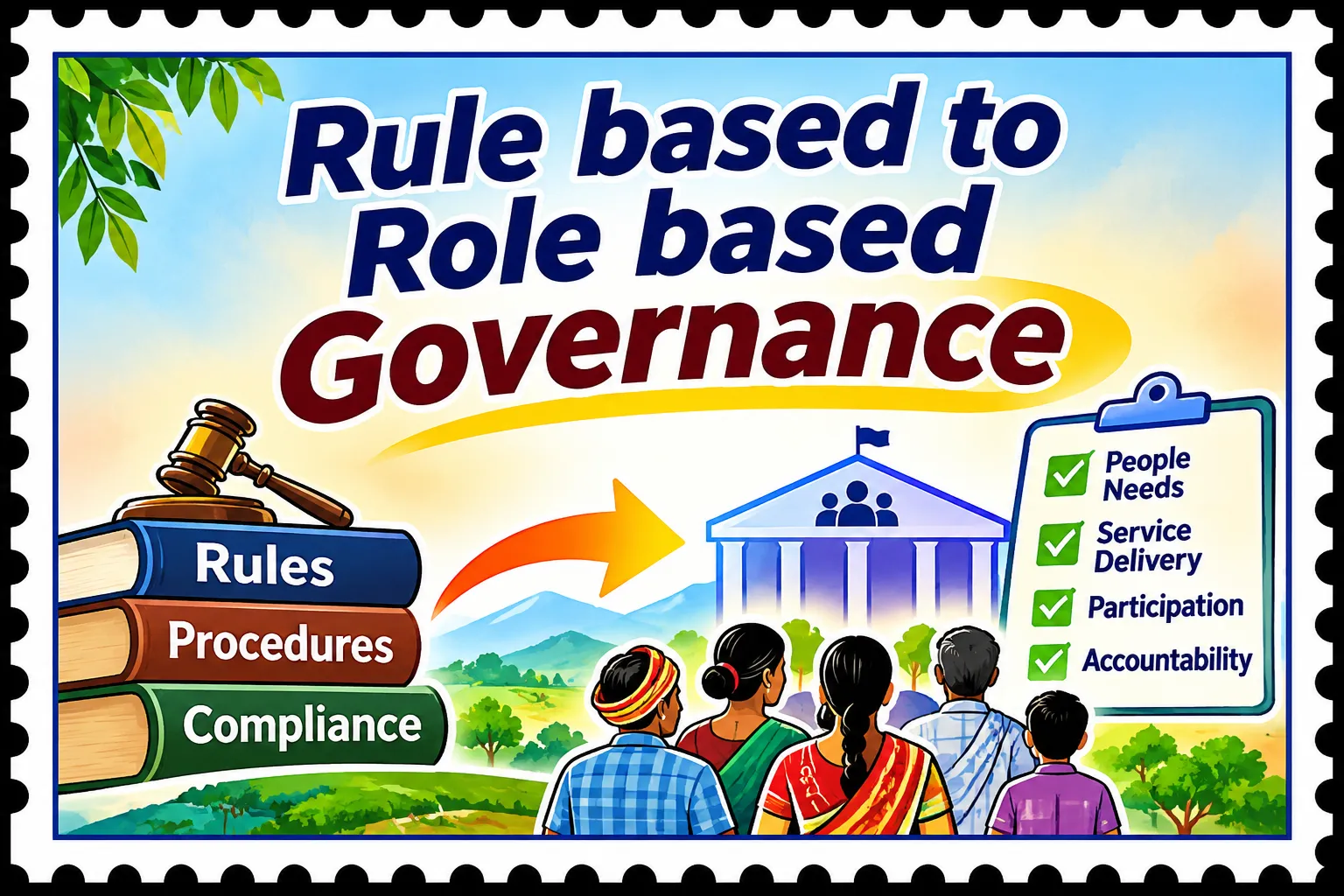
Here is a portion of writing by Smt.Usha Padhee , IAS from her long article in Linked In .
The real purpose of government is not merely to ensure that procedures are followed. It is to deliver outcomes that make people’s lives better. This requires a shift towards role-based governance, where public servants understand their responsibilities and exercise sound judgement to achieve the intended objectives. An officer’s performance should be assessed not only by how well procedures have been followed, but also by how effectively the responsibility entrusted to that officer has been fulfilled.
There are numerous examples where every procedure has been completed, yet the intended work remains unfinished. Consider a hospital building that has been constructed and medical equipment procured after following all prescribed procedures. Yet, the hospital remains non-functional for years because decisions on posting doctors and other staff are not taken. The building is ready, the equipment is in place and the files are complete. But the patient still has no hospital to go to.
An important difference between rule-based and role-based governance lies in the concept of ownership. In a rule-based system, responsibility often gets fragmented across several levels. Everyone may have completed their assigned part of the process, but nobody feels responsible for the final outcome. Files move from one desk to another, approvals are obtained and procedures are completed, yet the citizen continues to wait.
Role-based governance, on the other hand, encourages officials to own the outcome. It requires them to take decisions and exercise discretion in the larger public interest. Discretion does not mean doing what one wants, it means understanding what ought to be done within the framework of law and public interest. A system that discourages all discretion may be safe, but it can also become ineffective.
This transition requires a change in institutional culture, and that change must begin with leadership. Leaders need to communicate expectations clearly, delegate authority appropriately and empower officers along with accountability for results. Excessive centralisation weakens ownership at lower levels. When every decision requires multiple approvals, officers tend to refer matters upwards rather than resolve them. This delays decisions and reduces the confidence and capacity of the administrative machinery.
Trust and accountability must go together. Honest decisions taken in good faith should be treated differently from deliberate wrongdoing. For instance, in urban governance, the number of roads constructed is only one indicator of performance. Their quality, durability, accessibility and usefulness in improving citizen mobility are far more important. Similarly, in a drinking water supply scheme, installing taps and establishing a distribution network cannot be treated as the final achievement. The real outcome is whether every household receives safe and adequate drinking water. The focus must shift from measuring the completion of activities to measuring the difference they make to people’s lives.
Ultimately, citizens do not judge government by the number of files processed or procedures completed. They judge it by whether their grievances are addressed, whether public services reach them on time and whether their lives become better.
The transition from rule-based to role-based governance is not about weakening institutional discipline. It is about giving that discipline a larger purpose. Rules define the boundaries of authority. Understanding one’s role provides the purpose and direction. That is the journey from Karmachari to Karma Yogi; from merely occupying a position in government to owning the responsibility of public service. In essence, this is the foundation of citizen-centric and effective governance..
Copied Portion of writing By Smt.Usha Padhee , IAS in Linked In
Keep Koraput Online Free & Growing
Every story, local interview, and district update is made possible through dedicated community efforts. Your contribution directly funds server costs and independent ground reporting across Southern Odisha.
Contributions of any size even small amount can make a tangible difference.