


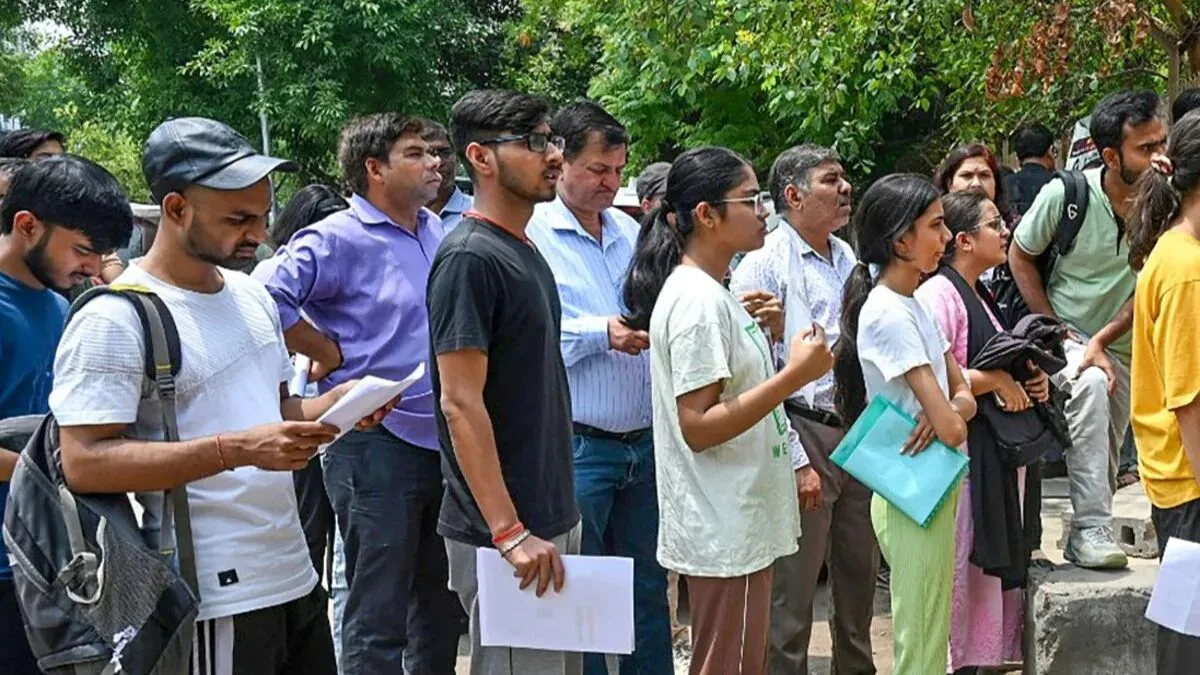
he unprecedented security surrounding the re-conducted NEET-UG examination may ultimately be remembered for what it revealed rather than what it prevented. Metal detectors, biometric verification, signal jammers, surveillance cameras, police deployments and even military-assisted logistics projected an image of a state determined to protect the integrity of a crucial national examination. Yet the very scale of these precautions raises a more uncomfortable question: why has India’s education system reached a point where an entrance test must be conducted like a high-security operation? The answer lies in a growing mismatch between administrative capability and public expectations.
Competitive examinations have become among the most consequential institutions in modern India. For millions of young people, especially those from middle-class and lower-middle-class families, examinations are not merely assessments of knowledge. They are gateways to economic mobility, professional status and social advancement. In a country where opportunities remain scarce relative to aspirations, faith in the fairness of these gateways is indispensable. That faith has steadily weakened.
A credible examination system should be secure by design, not secure only under siege conditions.When fairness requires a security apparatus of such magnitude, the real issue is not whether the latest examination was protected. It is whether public trust has become so fragile that only extraordinary measures can keep it alive.
Source : Opinion Page of The Statesman , Dt.23-06-26