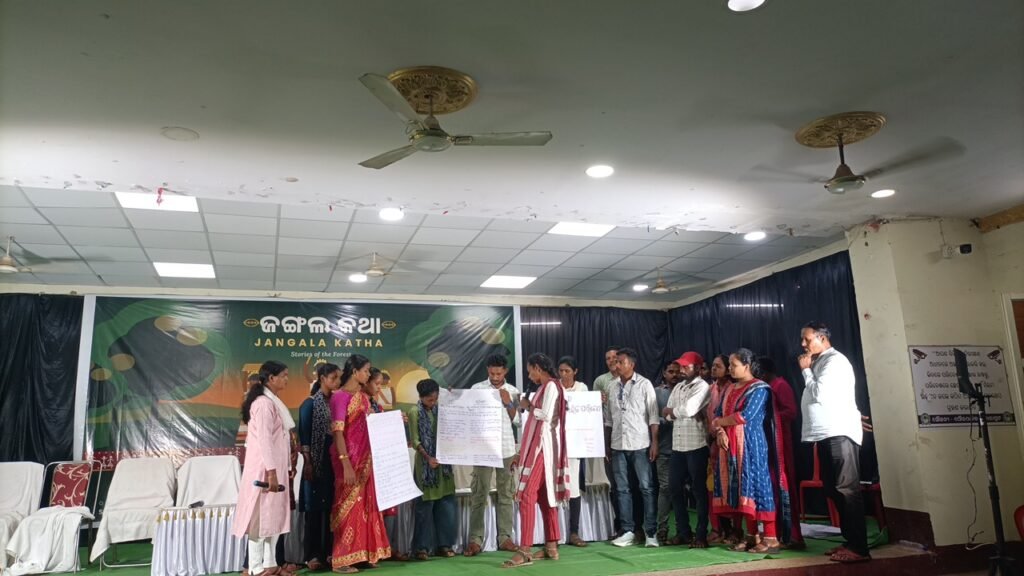


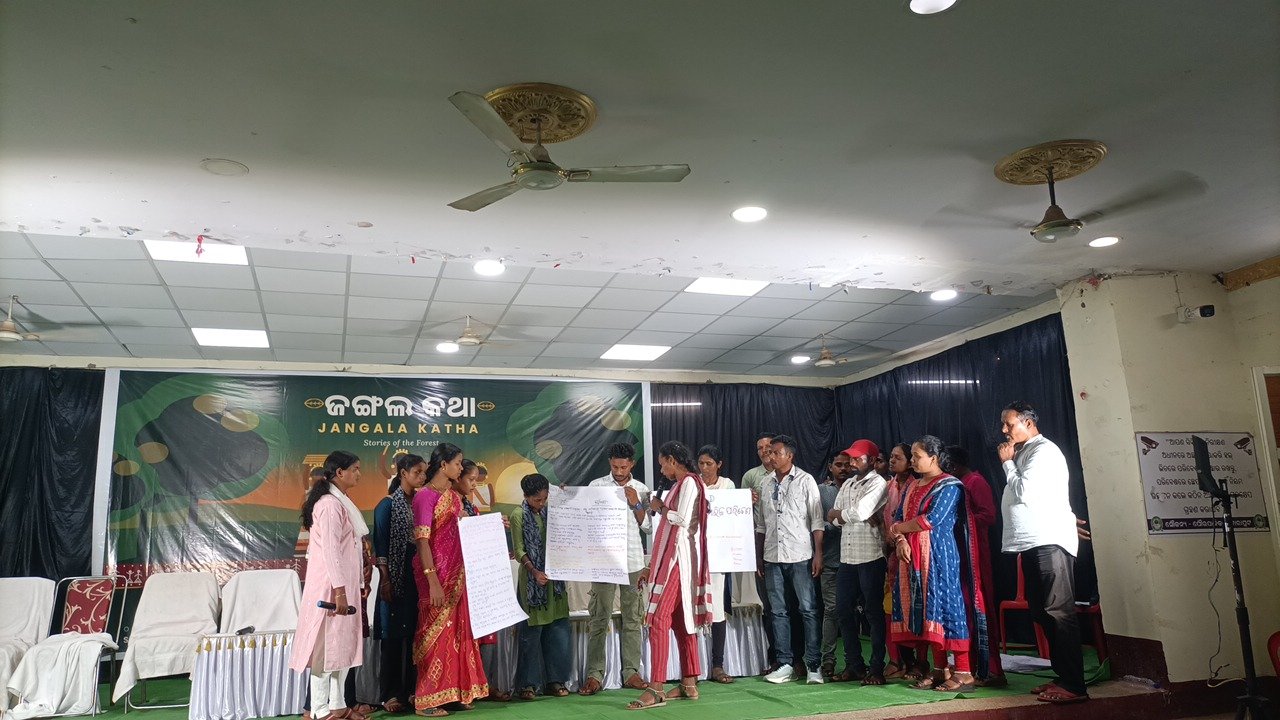
On the first day of Jungle Katha , Stories of Forest , organised by SPREAD and FES , Koraput participants from different parts of greater Koraput region shared their experiences while dealing with forest related issues . Here is a summary of what they said in their group presentations on the occasion .
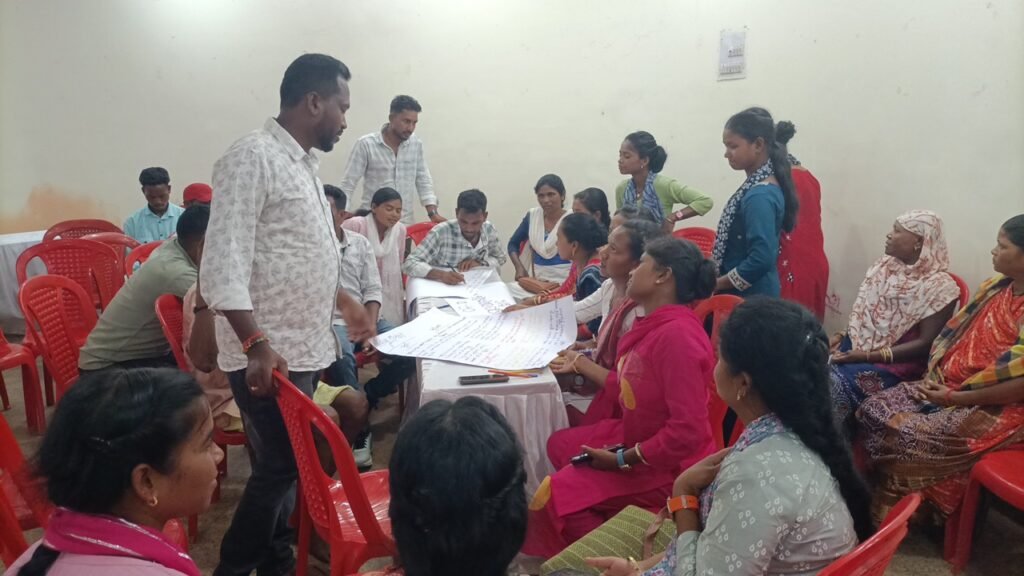
The discussion highlighted how forests once formed the backbone of rural livelihoods, supporting farming, hunting, fishing, and daily household needs. Earlier village life was described as closely connected to dense forests rich in wildlife and diverse tree species, including palm and bamboo. Rivers supplied fish for food, while hunting provided meat from birds and wild animals. Women played an important role in collecting forest products used for cooking, housing, and other domestic purposes. Farming reportedly flourished without dependence on chemical fertilizers, making communities more self-sufficient.
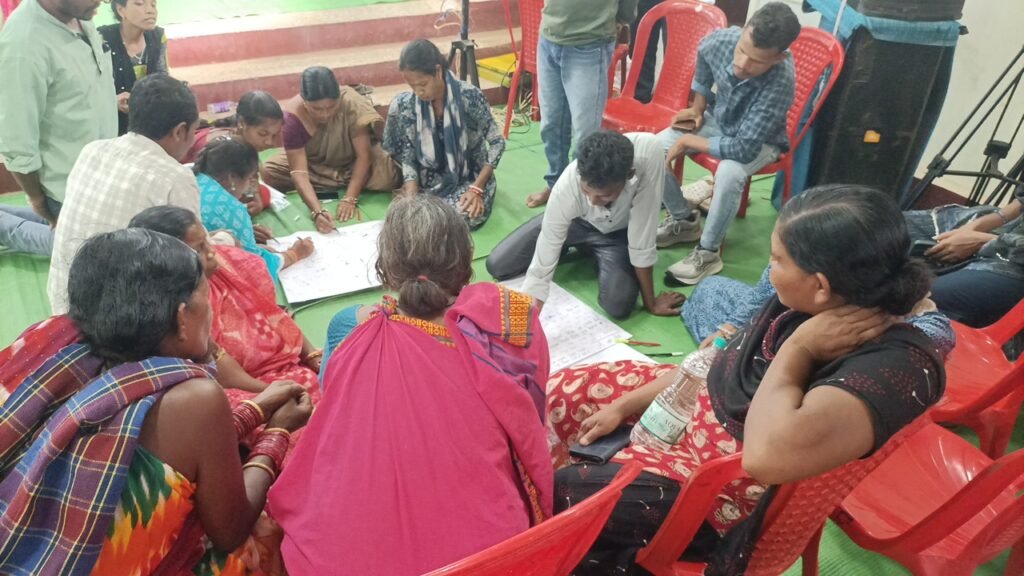
In contrast, present conditions were portrayed as increasingly difficult. Participants described shrinking forest cover, declining wildlife, and fewer useful trees than before. Rainfall was said to have become less reliable, affecting agricultural productivity and reducing the availability of crops and fruit-bearing trees. As natural resources diminish, many families now depend more on wage labor than on forest-based livelihoods.
To explain these changes, the speakers used visual materials and written notes comparing past and present realities. The comparison was presented as a clear example of environmental and social transition. The key message emphasized that protecting forests is essential for sustaining livelihoods, improving rainfall patterns, and strengthening long-term rural development.
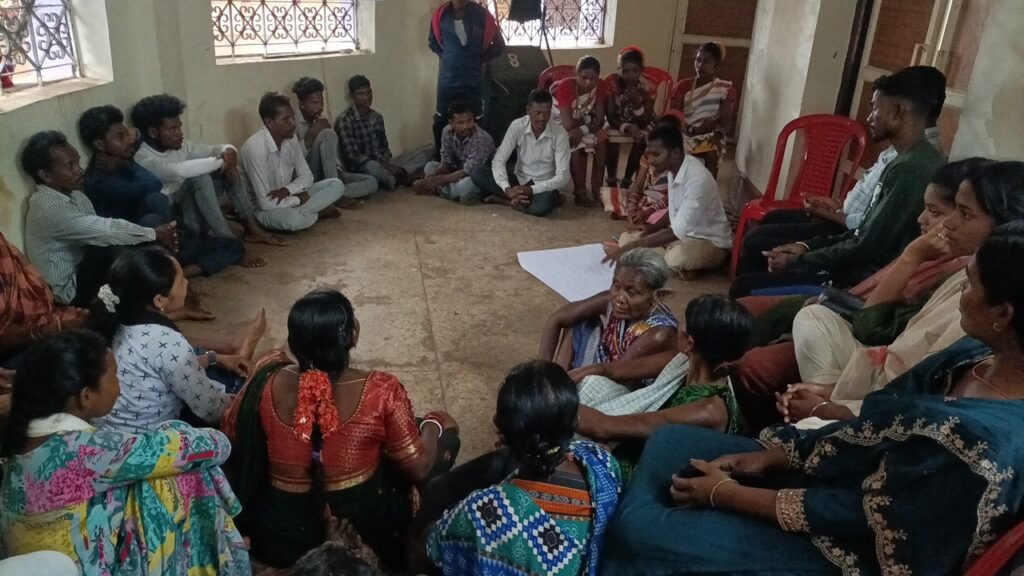
The community forest rights discussion focused on village-level challenges in managing forests under community rights. Participants described several governance problems affecting forest protection, rule enforcement, and local control over resources. Forest-related concerns were viewed as the village’s own responsibility under land and rights management policies. Villagers reported interference from neighbouring villages during forest reclamation, lack of collective action in some areas, unclear forest boundaries, and the absence of policy and rule display boards. Community members also noted that old trees are no longer available in sufficient numbers as before.
Forest fires emerged as a major concern, with participants stating that people continue to enter forests and light fires despite repeated warnings. Tree cutting without following village rules also continues, while monthly meetings of the forest rights committee have reportedly stopped. Fires are often witnessed but remain unreported to fellow villagers or the Forest Department, reducing accountability. Men and women alike were said to face difficulties arising from forest-use conflicts.
Participants further raised concerns that Forest Department plantations and tree removal often occur without Gram Sabha approval. Such actions were viewed as limiting fair community benefits.
Biodiversity was explained as the unity created through the variety of living organisms, including plants, animals, birds, and microorganisms that together maintain ecological balance. The discussion highlighted that understanding the value of biodiversity is essential before addressing the reasons for its decline. Biodiversity supports environmental stability, provides forest resources for daily needs, and sustains livelihoods through forest-based products such as mushrooms, bamboo, and tubers. It also contributes to livestock care, natural organic fertilizers, traditional medicines, pollination, and balanced seasonal patterns of rainfall, heat, and winter.
Several causes of biodiversity loss were identified. Uncontrolled tree cutting, forest fires, hunting, and the collection of animal body parts for decoration or rituals were seen as major threats. The expansion of telecom towers and their radiation effects on birds and animals was also mentioned as a concern. Additionally, the loss of traditional forest knowledge has weakened people’s connection to medicinal plants and ecosystem protection.
To restore biodiversity, communities were encouraged to protect forests collectively and avoid unnecessary tree cutting and burning. Practical solutions such as preparing seed balls using local seeds, cow dung, soil, cow urine, and husk were recommended for reforestation during the rainy season. Village-level action and shared responsibility were emphasized as key to rebuilding biodiversity and sustaining livelihoods for future generations.