


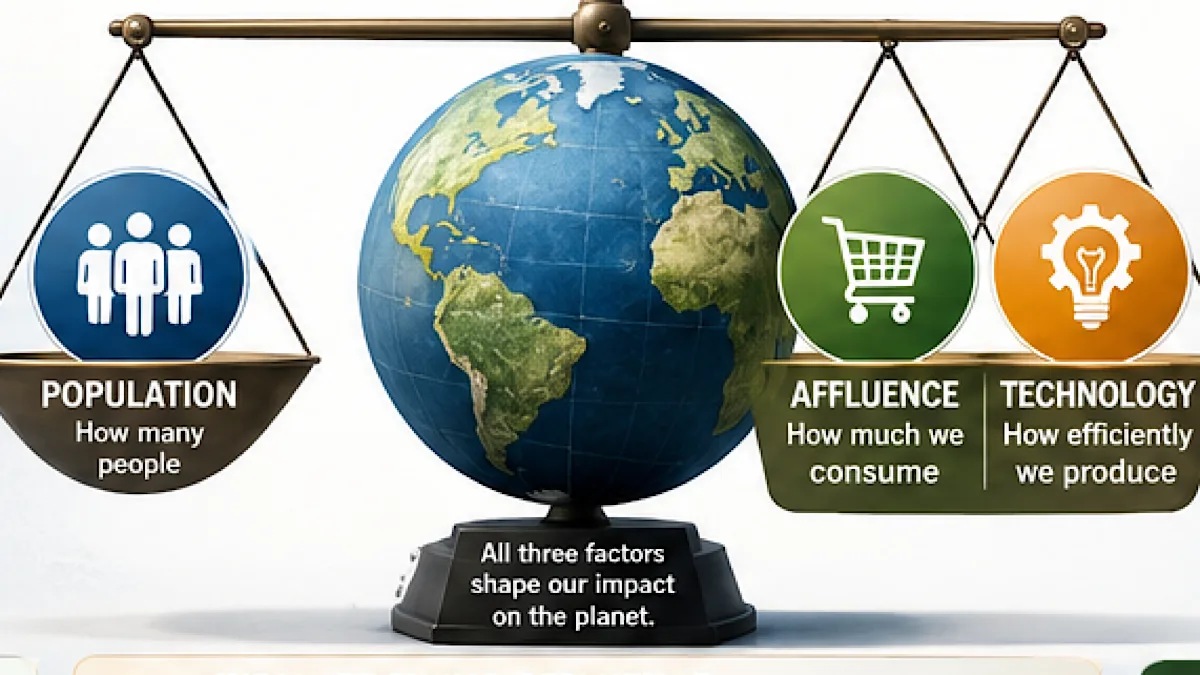
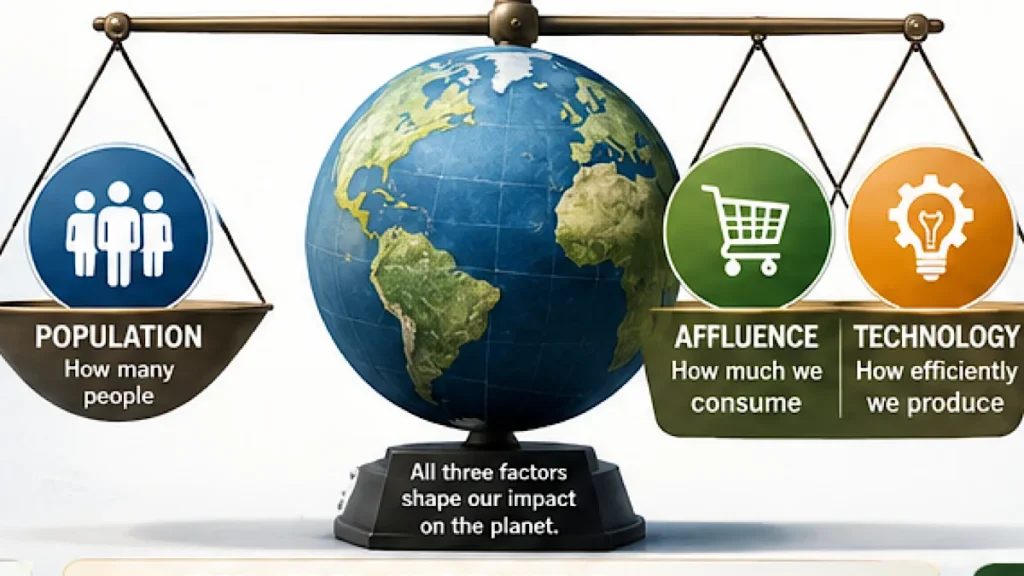
Environmental impact is influenced not only by the number of people but also by how people live; their lifestyle matters more. Economists often describe this relationship through the IPAT framework, which states that environmental impact is shaped by population, affluence, and technology.
Population matters, but rising income levels and consumption patterns can increase environmental pressures even when population growth slows. India is a good example of this trend. As a developing country, India is using more and more energy as its economy grows. According to the International Energy Agency (IEA), energy use per person in India increased by 207 per cent between 2000 and 2024. Even though India’s population is expected to start shrinking in the 2060s, India’s fertility rate has already fallen to 1.9, below the replacement level of 2.1 needed to stabilise population size, and experts think energy demand may continue to grow.
As people become wealthier, they tend to purchase more appliances and electronic devices, travel more frequently, consume more resource-intensive products, and demand higher levels of comfort at home and at work. The growth of air conditioning illustrates this trend. Rising incomes and increasing temperatures are expected to drive a dramatic increase in air-conditioner ownership across developing countries. India is projected to experience one of the largest increases in cooling demand over the next few decades. Similarly, global air travel is expected to continue expanding as incomes rise and more people enter the middle class.
The most effective solution is not merely slower population growth but the creation of cleaner energy systems, more efficient technologies, sustainable cities, and consumption patterns that reduce environmental pressures without compromising human development. Population changes slowly on its own, but lifestyle is something that policies, technology, and our choices can change. That is where the greatest opportunities for addressing climate change and resource stress are likely to be found.
Source : An Article Published in The Statesman in the Opinion Page by MAYA K, NEERAJ KUMAR AND SREEDEVI RS | New Delhi |